
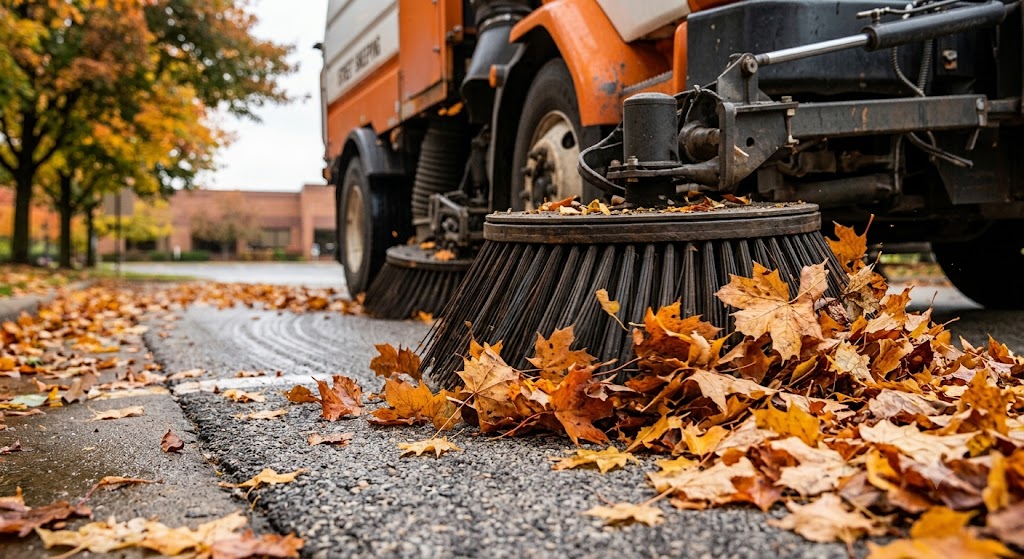
For power sweeping contractors, autumn isn’t just another change of season—it’s the ultimate operational stress test. As leaves fall, rain increases, and temperatures drop, demand for parking lot and street sweeping surges. Commercial property managers want their lots clear of slick debris, and municipalities need storm drains kept open before winter freezes set in.
While fall represents one of the most profitable times of the year, it also brings heavy equipment wear, demanding schedules, and unpredictable weather. Preparing your team and your fleet early is the key to converting the autumnal workload into maximized profits without burning out your equipment—or your operators.
Here is how contractors can gear up for an efficient and profitable fall sweeping season.
1. Upgrade and Deep-Clean Equipment Early
Leaf season puts unique demands on power sweepers. Heavy, wet leaves require maximum suction, pristine head seals, and properly tuned broom pressure. Waiting until the leaves hit the asphalt to test your gear is a recipe for costly downtime.
- Check Seals and Gaskets: On regenerative air and vacuum sweepers, inspect the pickup head seals, flap rubber, and door gaskets. Air leaks drastically reduce suction efficiency, making it nearly impossible to pick up wet, matted leaves.
- Inspect Brooms and Brushes: Main brooms and gutter brooms wear down significantly faster under heavy leaf loads. Replace worn broom segments now and keep a spare set in inventory for rapid swap-outs during peak weeks.
- Service the Auxiliary Engine & Hydraulics: Your auxiliary engine will be working overtime to generate the CFM (cubic feet per minute) necessary to lift heavy debris. Perform full fluid, filter, and belt changes. Check hydraulic lines for micro-cracks that could leak under heavy load.
- Calibrate Hopper Controls: Ensure your hopper dumping mechanisms and safety props are in top shape. You’ll be dumping heavier loads far more frequently.
2. Optimize Dump Logistics and Waste Disposal
One of the biggest bottlenecks for contractors during leaf season is debris disposal. Wet leaves are heavy, bulk up quickly, and take up significant hopper volume, requiring more frequent trips to dump sites.
- Secure Disposal Sites Early: Don’t rely on a single green-waste facility or landfill. Identify backup dumping locations in case your primary site experiences long lines or reaches capacity.
- Understand Weight Limits: Wet leaves mixed with dirt and moisture weigh significantly more than dry summer debris. Keep a close eye on your vehicle’s Gross Vehicle Weight Rating (GVWR) to prevent axle damage, stay compliant with DOT standards, and avoid costly road fines.
- Consider On-Site Transfer Options: If you manage large commercial complexes, negotiate dedicated, temporary composting staging areas on-site with property managers when permissible. This minimizes deadhead miles spent driving to transfer stations during high-volume periods.
3. Train Operators for Autumn-Specific Hazards
Fall conditions alter driving and sweeping dynamics. Investing a few hours in refreshed operator training before the rush pays off in fewer accidents and better customer satisfaction.
- Navigating Wet Leaves: Wet leaves create slick surfaces that mimic black ice. Remind drivers to increase braking distances and lower sweeping speeds when handling thick foliage.
- Hidden Obstacles: Leaves easily conceal high curbs, storm drain grates, concrete parking stops, and heavy trash. Teach operators to maintain a safe distance from unknown piles and use gutter brooms cautiously to avoid hooking hidden edges.
- Fire Safety: Dry leaf buildup around hot exhaust pipes, catalytic converters, or auxiliary engine manifolds poses a serious fire hazard. Instruct operators to conduct mid-shift inspections and remove leaf pack from engine compartments regularly.
4. Align Communication with Property Managers
Fall is an ideal time to upsell existing clients and set clear operational expectations. Proactive communication builds trust and protects your bottom line.
- Set Realistic Expectations: Educate property managers on the reality of leaf drops. Clarify that during peak drop weeks, a lot cleared at 4:00 AM may have a fresh layer of leaves by 8:00 AM.
- Offer Supplementary Services: Autumn is the perfect time to bundle power sweeping with complementary services like storm drain clearing, pressure washing walkways, or catching clogged roof downspouts before winter storms arrive.
- Establish Clear Routes: Map out optimized routes that prioritize properties with dense tree canopies right after windstorms or cold snaps, saving low-density lots for routine shifts.
5. Build an Operations & Maintenance Contingency Plan
Even with immaculate preparation, equipment breaks down and weather changes rapidly. A resilient contractor always has a plan B.
- Establish Vendor Support: Talk to your parts suppliers and local mechanics to verify lead times on high-wear components like vacuum hoses, broom motors, and seals.
- Build a Rental/Subcontractor Network: Know where you can rent an extra sweeper truck on short notice, or establish a mutual-aid agreement with a non-competing local operator to cover routes in emergency situations.
Final Thoughts
The fall sweeping season brings a tremendous surge in demand, giving contractors a prime opportunity to end the year on a high financial note. By prioritizing preventative maintenance, setting realistic client expectations, and emphasizing operator safety, you can turn autumn’s heaviest debris into your business’s most profitable season. Start your preparation today so when the leaves start dropping, your team is ready to roll!