
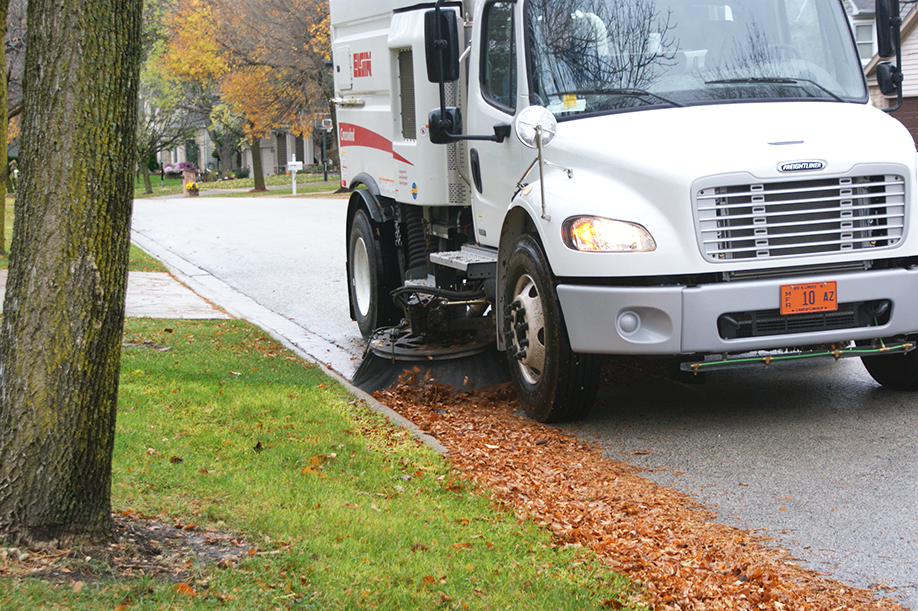
Dealing with fall leaf accumulation and debris may be the focus at this moment, but it’s also the time to plan how to prepare street sweepers for winter. Proper street sweeper winterization ensures that street sweepers remain in top working condition and can help prevent unexpected breakdowns in cold weather.
1. Prepare infrastructure.
Beyond sweeping up leaves, clear debris from stormwater systems to reduce freeze-related drainage issues. Catch basin cleaning goes hand-in-hand with street sweeping. When snow melts and water levels rise, the risk of flooding increases, making catch basin cleaning critical. A productive fall sweeping program eases the transition to winter for municipality streets, stormwater systems and infrastructure.
2. Continue daily upkeep.
Before winterizing, ensure daily maintenance keeps the street sweeper in top shape. This will save time when winterizing and also help keep the sweeper performing at maximum during the heavy cleaning of fall debris. This is also why easy upkeep is incredibly advantageous. For example, the Elgin Pelican has many features for easy access including Quick-Clean access panels, which allow operators easy access for daily cleaning of the main broom, top of conveyor throat, and conveyor opening and servicing all lubrication points. No tools are required to access these components. These types of features help set up for the next job quickly and efficiently.
3. Give a thorough cleaning and prepare water systems.
Don’t wait until the cold weather begins. Remove all debris from the hopper, brushes, and any other components. Then inspect the sweeper for any signs of wear or damage such as cracks, rust, or other issues that could worsen in cold weather. Addressing these problems early helps prevent costly repairs down the line.
For sweepers that use water, those water systems can be particularly susceptible to freezing, which could cause damage. As such for any street sweepers remaining active in the winter, a non-toxic antifreeze solution should be added to the water system to prevent freezing. This is especially critical for sweepers that rely on water for dust control.
4. Shield from corrosion.
Winter weather can accelerate corrosion on metal components. Applying a corrosion inhibitor or grease to exposed metal surfaces helps prevent rust and structural damage. Pay special attention to moisture-prone areas, like joints and hinges, to maintain the sweeper’s durability and performance.
Don’t forget to check the sweeper’s brushes and brooms for signs of wear. Considering the debris commonly found in winter, such as sand and salt, broom settings should be adjusted to handle that material.
5. Protect sweepers in long-term storage.
For sweepers stored over extended periods, take extra steps to protect them. Keep the sweeper in a dry, covered area, shielded from weather exposure. Thoroughly drain all water systems and purge water lines by draining or using compressed air. Also drain the fuel system, and ensure all drains remain open so that any remaining water can escape. Cover it with a tarp or similar protection to prevent moisture buildup.
Proper winter preparation extends equipment lifespan, supporting public safety as well as worksite safety by ensuring cleaner, safer streets and pathways in the toughest winter weather.
For more information about Elgin street sweepers including the Elgin Pelican, visit ElginSweeper.com.