
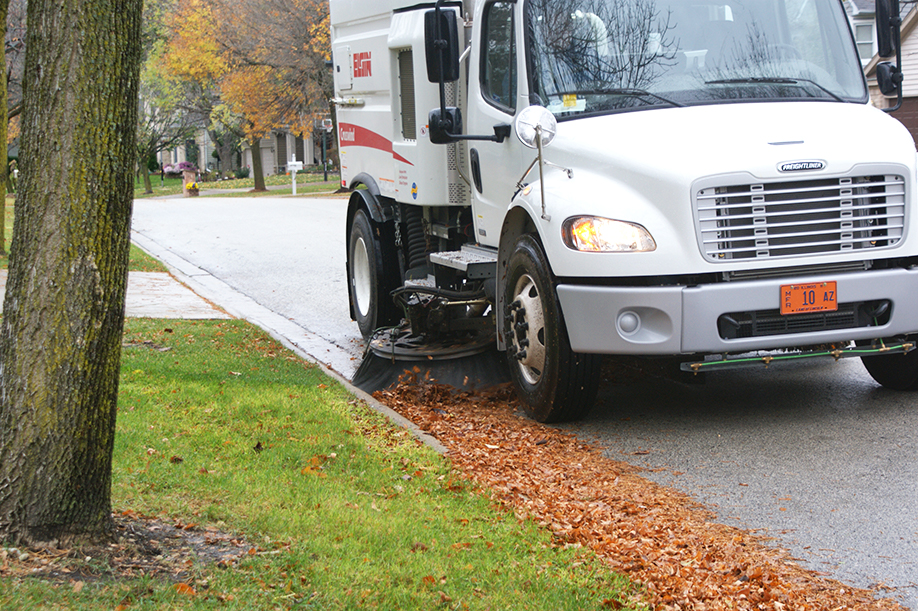
Six ways municipalities can accomplish more before winter arrives
Fall presents a unique challenge for street sweeping operations. Unlike spring cleanup, where crews focus on removing accumulated winter sand, salt and debris, autumn brings a constantly changing stream of leaves, organic material and stormwater concerns.
The challenge goes beyond removing more debris: How can you maintain productivity while conditions change almost daily?
As communities prepare for winter, a proactive approach to fall sweeping can help crews accomplish more work, reduce downtime and keep stormwater systems functioning properly.
Here are six ways municipalities can improve productivity during fall sweeping season.
1. Adjust Routes Before Leaf Drop Peaks
One of the most common mistakes municipalities make is treating fall routes the same way they treat summer routes.
Leaf accumulation rarely occurs evenly across a community. Streets lined with mature deciduous trees can require significantly more attention than other areas, while business districts and neighborhoods with younger tree canopies may need fewer passes.
Identifying high-volume leaf areas early allows crews to adjust sweeping frequency before debris becomes overwhelming. More frequent sweeping often results in smaller, more manageable loads and less time spent addressing clogged storm drains and problem areas.
2. Focus on Preventing Problems, Not Just Cleaning Them
Leaves rarely create problems on their own.
A bigger issue occurs when leaves combine with sediment, litter and other debris to restrict water flow.
Storm drains, curb lines and low-lying collection points should receive special attention during fall maintenance programs. Clearing these areas before major rain events can help prevent localized flooding and reduce emergency response calls.
A preventive approach often proves more productive than repeatedly responding to the same trouble spots throughout the season.
3. Match the Sweeper to the Application
Fall sweeping conditions can vary greatly depending on a variety of factors.
Heavy leaf accumulation, construction debris, fine dust and stormwater management applications may require different sweeping technologies. Mechanical broom sweepers such as the Elgin Eagle or Elgin Broom Bear are often effective for handling heavy organic material and larger debris, while regenerative air and vacuum sweepers such as the Elgin Crosswind1 and Elgin RegenX1 excel at removing finer particles and supporting environmental cleanup objectives.
Understanding the strengths of each machine in a fleet allows municipalities to deploy equipment where it will have the greatest impact and productivity.
4. Optimize Equipment Settings
Small adjustments can have a significant impact on sweeping performance.
Before peak leaf season arrives, operators should review manufacturer recommendations for broom pressure, broom angle, pickup head settings and water application rates. Improper settings can reduce pickup efficiency, increase broom wear and create unnecessary rework.
A properly adjusted sweeper collects more material in a single pass and helps maximize productivity throughout the shift.
5. Reduce Downtime Through Daily Inspections
Fall sweeping places unique demands on equipment.
Leaves, sticks and hidden debris can create wear and tear that isn’t always immediately visible. Daily inspections of brooms, conveyors, pickup heads, hydraulic systems and water systems help identify potential issues before they become costly repairs.
Operators should also pay close attention to hopper capacity and debris buildup. Cleaning equipment regularly throughout the season helps maintain consistent performance and reduces unnecessary downtime.
6. Prepare for Winter While You’re Still Sweeping
Fall sweeping is about more than leaves.
It’s also an opportunity to prepare infrastructure and equipment for winter conditions. Clearing debris from stormwater systems helps reduce freeze-related drainage issues, while preventive maintenance ensures sweepers are ready for the demands of snow season and early spring cleanup.
Municipalities that combine fall sweeping with winter preparation often experience fewer equipment issues and a smoother transition between seasons.
Productivity Starts with Planning
The most productive fall sweeping programs don’t happen by accident. They result from proactive route planning, proper equipment deployment, routine maintenance and a commitment to preventing problems before they occur.
By taking a strategic approach to fall sweeping, municipalities can improve operational efficiency, protect infrastructure and enter winter with cleaner streets and greater confidence.
For more information about Elgin’s complete line of street sweepers, visit ElginSweeper.com.