
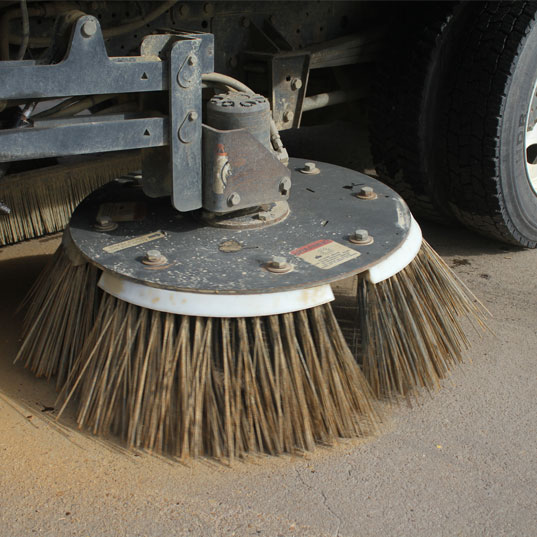
There are huge and well-known benefits of having your own full-time mechanic onsite to maintain and repair your powersweeping trucks and other fleet vehicles as needed. There are also some serious costs and risks that come along with the advantages. Here, we’ll look at the pros and cons of hiring a mechanic for your company, to give you a clearer picture of both sides of the general considerations. You can then weigh all the factors and make a more informed decision about whether employing a professional mechanic is right for your business at this time.
Benefits of Hiring a Full-Time Mechanic
Hiring an in-house mechanic can transform the operational efficiency of your powersweeping business. A full-time onsite mechanic brings powerful advantages, especially to larger fleet owners. For example, there’s the assurance of priority handling of urgent truck repairs, with no waiting in a queue at a busy local auto shop, among other benefits of having your own mechanic:
Benefits of Hiring a Mechanic:
- Faster repairs, reduced losses due to truck downtime
- Consistent repair and maintenance quality
- Convenient preventive maintenance routine for trucks
- Specialized knowledge of your truck types onsite
- Timely critical cleaning of fan systems, hoppers, etc.
- Convenient scheduling to meet your business’s priorities
- Inventory of frequently needed parts eliminates waiting
- In-house training cost absorbed for shop assistants
- Drive-time and fuel cost eliminated for auto shop service
- Direct control of mechanical work quality
- Familiarity with your mechanic’s skills and training needs
- Overall reduced use of more costly outside repair shops
Downside of Hiring a Full-Time Mechanic
The upside of having your own shop and full-time mechanic in-house is so great that it can be too tempting to ignore the costs and risks you’re taking on when you add a mechanic to your team as a long-term employee. It’s important to be aware of all the special considerations before you make the decision to hire a professional to fill that job description.
Costs of Hiring a Mechanic
- Competitive salary for well-skilled auto mechanic
- Employee benefits payments for an additional employee
- Workspace modifications to create truck service area
- Significant investment in quality shop equipment and tools
- Continuing professional skills training expenses
- Increased Worker’s Comp insurance cost
- Safety compliance risk
- Continuous safety training expense
- Overhead to operate a mechanics facility onsite
Insights from 2025 Sweeper Summit – Onsite Mechanic
The NAPSA guidelines and industry insights shared during the most recent Sweeper Summit discussion of this topic emphasized the substantial benefits of hiring an in-house mechanic. Bill Smith, Owner of Smith Property Services, Raynham, Massachusetts, presented a closer examination of the issue.
Bill reviewed the various benefits, costs, risks, and other considerations in an analysis of the practice of having a full-time mechanic working in-house as part of your powersweeping business, vs. using an outside auto service shop for mechanical maintenance and repairs.
The discussion emphasized the operational advantages of minimizing downtime for sweeper truck repairs and maintenance, which can be exceptional. On the other hand, it also explored the costs of a competitive salary for a talented professional mechanic, quality specialized tools, increased insurance requirements, and providing an appropriate auto shop workspace, all serious financial factors.
The takeaway message from the Summit discussion was about balancing the considerations in making a hiring decision to bring a mechanic on board. The point was that hiring a mechanic means reduced downtime and other big benefits, but the costs of quality tooling, training, safety systems, salary, and insurance must not be overlooked.
Potential Big Bonus Advantages of In-House Mechanic
We talked with Bill Smith recently and he stressed a couple of often missed possibilities that can be the deciding factors for many sweeping business owners in determining whether to bring on a mechanic. Bill said that as a takeaway from his coverage of the question, he would hope people remember these points:
“I think for me the decision was made when my repair cost through a dealership was about 75% of the salary for an in-house mechanic for a year. And, when you have a mechanic onsite, you get so much more than a few repairs per year.
When you buy one sweeper you have to have a spare sitting there, because it’s gonna break. It’s worth having someone in your shop that can handle repairs and do preventive maintenance. That way, the truck is not breaking down on the job as often. It’s a lot about finding the right person too. You need to have someone who catches issues before things get to the point of breaking down. Not having the breakdown is the best way to manage that potential problem.
The mechanic can also become a spare sweeper truck driver. He can be a guy there onsite available to jump in the seat and go, so you always have a spare driver, not just a mechanic.”
NAPSA Best Practices: In-House Mechanic
It’s always useful to revisit NAPSA policy recommendations and industry Best Practices for any course you pursue to improve your business. Per NAPSA wisdom, doing so in this case can help you reestablish your commercial truck care budget from an expense to a strategic benefit by optimizing your fleet’s efficiency. Relevant Best Practices include:
Preventive Maintenance
Timely scheduled preventative sweeper truck maintenance extends equipment life. Maintain an ongoing schedule of routine truck maintenance at your shop.
Safety Training
Implement stringent auto shop safety policies. Include procedures, required PPE, fire safety, lock-out/tag-out protocols, etc.
Skills Training
Provide your mechanic(s) with updated training as applicable for your company’s sweeper models.
Adherence to Industry Standards
Follow NAPSA standards, including documenting inspections, maintenance, and repairs to maintain histories for maximum equipment life and liability protection.
Truck Care Workspace
Provide a properly lit and equipped truck repair shop that includes the necessary special tools and equipment to perform repairs and maintenance on sweeper trucks.
Onsite Parts Stock
Keep an inventory tracking system for managing frequently needed sweeper truck parts, such as brooms, brushes, filters, hydraulic hoses, and others, to avoid repair delays for shipping.
Manage Financial Factors
Focus on balancing benefits, like increased uptime, repair quality control, and smooth maintenance routines, against costs, like tool purchasing, building alterations, and safety risks.
CONCLUSION
So, is having an in-house mechanic right for your sweeping business? It’s the obvious solution to ensure quick resolution of truck problems by preventing long wait times at busy outside auto repair shops. Having a mechanic onsite also means you’re likely to keep some key parts on hand, which can be another big layer of time savings, empowering you to move ahead with repairs immediately without waiting for parts shipments or deliveries.
However, per the NAPSA Sweeper Summit learning session on the question, make sure you carefully weigh the benefits of time-savings and convenience against the long-term overhead expenses of having an in-house mechanic.
On balance, the reality is that, over time, you’ll continue to need frequent repairs of all kinds on even the best-maintained sweeper trucks. That’s the nature of the powersweeping field. Your onsite expert becomes arguably the most knowledgeable professional in your auto service market about your trucks, whatever their makes and models.
If you bring a mechanic on board, a key goal of that team member should be to add value to the role, by continuously exploring ways to maximize his usefulness to the business. He should develop a comprehensive system for maximizing the life of the fleet, while efficiently managing costs and risks in the mechanical work required to maintain it.
For more on the presentation of this topic at the Sweeper Summit, see Facebook, Sweeper Summit: The Ups and Downs of In-House Mechanic Expertise.