
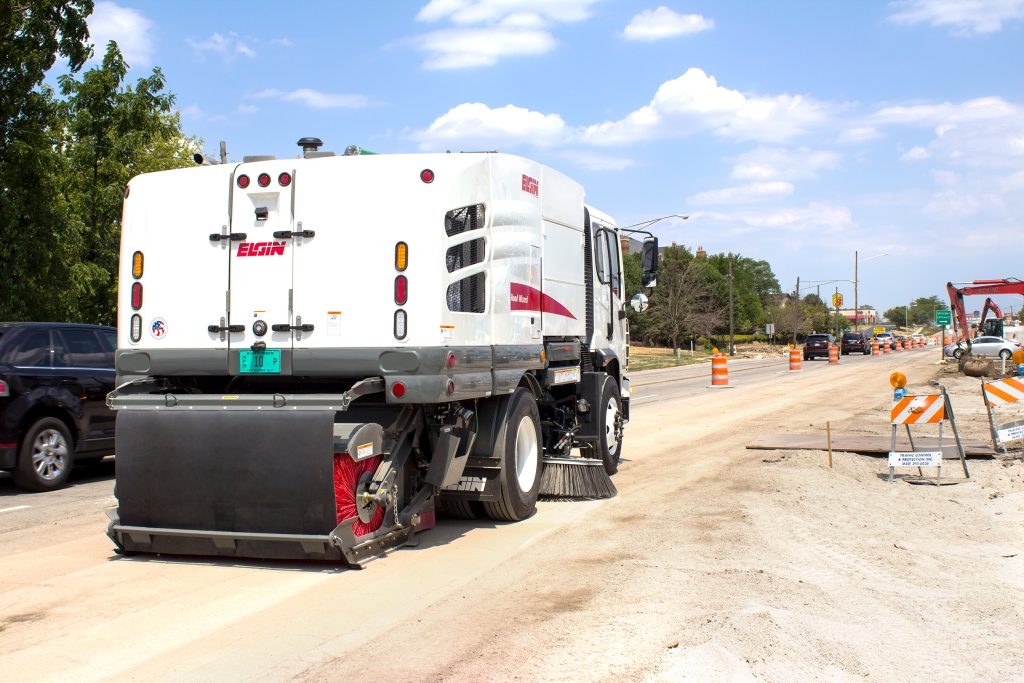
Keeping city streets clean is about more than visual appeal. Regular street sweeping supports public safety, public health and environmental protection.
Similarly, street sweeping requires more than just powerful machines making straight runs to whisk away dirt and debris. It demands precision, especially when sweeping around obstacles like parked cars, utility poles or curbside vegetation.
Whether operators use mechanical broom sweepers, regenerative air or vacuum systems, strategic maneuvering and thoughtful operation are essential for complete and efficient cleaning.
Each type of street sweeper is suitable for different urban and environmental needs. Mechanical broom sweepers rely on rotating brushes to push debris into a hopper. Regenerative air sweepers use blasts of high-velocity air combined with suction to clean surfaces, while vacuum sweepers employ a straightforward suction system. Waterless sweepers, such as those used by many municipalities prioritizing sustainability, combine vacuum and mechanical features with advanced dust-control systems that eliminate the need for water.
Here are a few best practices for operators navigating obstacles on and next to streets:
- Use gutter brooms for curb work. Extendable gutter brooms, available on many models like those from Elgin Sweeper, are ideal for sweeping close to curbs, storm drains and along parked vehicles. Their flexibility allows operators to reach debris without causing damage.
- Slow and steady wins the race. Reducing speed when approaching obstacles improves accuracy and prevents the machine from skipping debris hidden behind or under objects.
- Maneuverability is key. Street sweepers with tight turning radii are better equipped to navigate around light poles, traffic islands and road signage.
- Sweep in sections. When sweeping near obstacles, breaking up the job into smaller segments ensures nothing is missed. Making multiple passes may be necessary in heavily obstructed areas.
- Leverage camera and sensor systems. Many modern sweepers, including select Elgin models, feature advanced visibility and guidance systems to help operators detect nearby objects and adjust their approach in real time. DualEyes Camera System for example is Elgin Sweeper’s system for increased visibility on the front right tire and front right corner of the sweeper in addition to the right-side broom. This enhanced visibility of the curbline shows any possible obstructions in the sweeper’s path.
Look for street sweepers engineered with challenges in mind, offering versatile broom configurations and intelligent design features that help operators clean efficiently — even around the most stubborn obstacles. With the right techniques and the right equipment, cities can keep their streets safer, cleaner and looking their best. For more information, visit ElginSweeper.com.